1st "Málaga on the Move" Forum
Alfil Patrimonial Presents Proposals to Resolve the Housing Crisis at the First “Málaga se mueve” Forum
The first edition of the conference brought together leading professionals from the main economic sectors in the province of Málaga
Marbella, November 23, 2026. The First “Málaga se Mueve” Forum, held on November 20 at the La Malagueta Cultural Center, brought together leading professionals from the main economic sectors of the province of Málaga to analyze current challenges and outlooks for 2027.
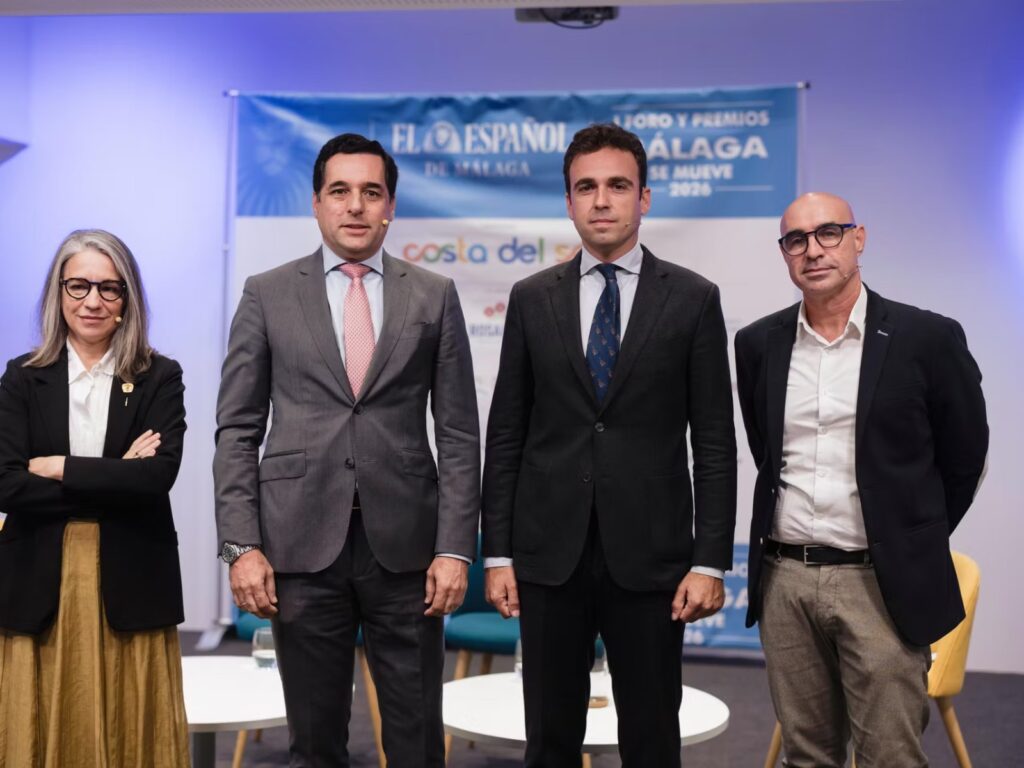
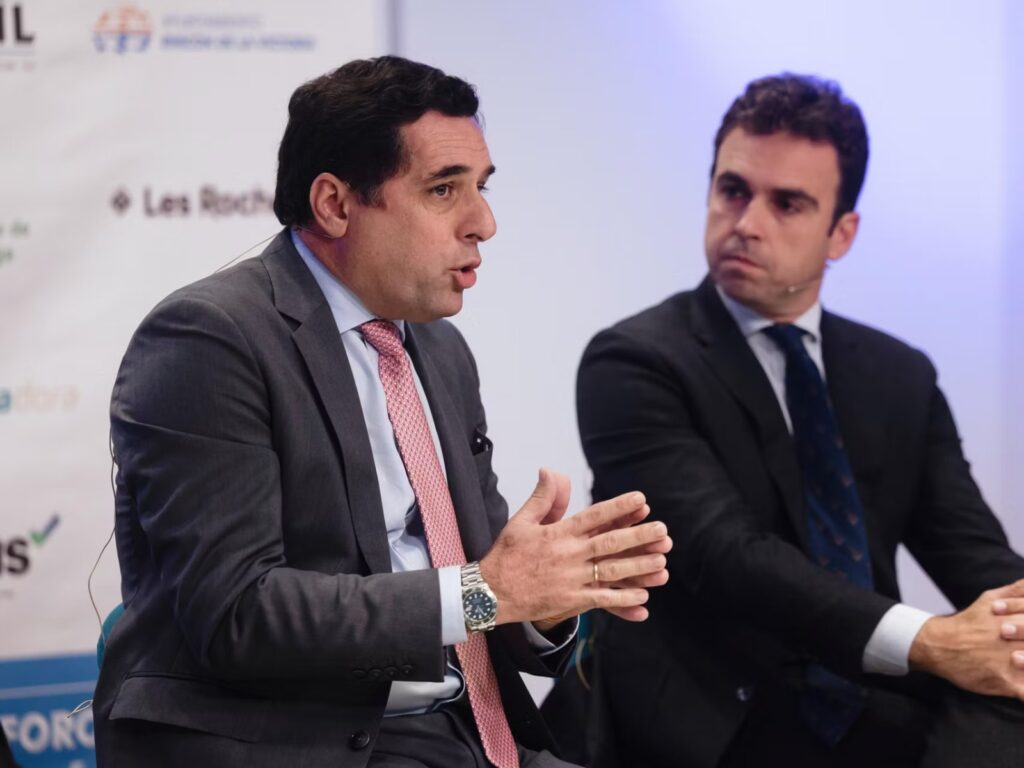
Alfil Patrimonial Socimi spoke on its own behalf during the session dedicated to housing, as part of a three-way discussion between Ignacio Peinado Guerrero, president of FADECO Promotores; Susana Garcia Bujalance, architect and director of the Urban Planning Laboratory; and Francisco Gómez, president and CEO of the Marbella-based company. The panel, moderated by Sebastián Sánchez, editor-in-chief of EL ESPAÑOL in Málaga, provided an expert analysis of the proposals and measures needed to address the housing shortage in Spain.
Bureaucracy was the main topic of the day. There was discussion of projects that can depend on as many as thirty sector-specific reports, meaning that if just one is delayed or goes awry, an entire project can come to a standstill. The most frequently mentioned proposal was for a single point of contact to coordinate the procedures. On this point, Gómez emphasized that this role is not intended to “lower legal requirements, but rather to concentrate responsibility in one person or department, so that anyone who wants to build does not have to go from one government agency to another without a clear answer.”
Alfil’s CEO provided one of the most illustrative examples when he explained that a one-year delay in obtaining a permit for a building with80 housing units can result in hundreds of thousands of euros in financial costs, which ultimately translates into a higher price for the end buyer.
The shortage of land was the focus of another of the most interesting sessions. Among the ideas proposed, the president of FADECO advocated for a reevaluation of housing density and average unit size. Ignacio pointed out thatmost homes built in the 1980s exceed 100 square meters. The industry considers this type of housing to be out of step with current needs and the profile of prospective buyers. In this regard, he explained that if they had been designed at around 85 square meters, it would have been possible to build about 30% more units on the same plot of land.
Based on this line of thinking, he proposed the enactment of a Condominium Law that would make it easier to subdivide large properties. A 300-square-meter apartment, for example, could be converted into three 100-square-meter units, which would also be better suited to smaller households and changing family needs.
One of the points on which the three speakers agreed was the importance of ensuring that new developments have the facilities, services, and transportation networks capable of keeping pace with their growth. They warned of the deterioration of certain public services and called for social infrastructure to be built at the same time as housing, rather than years later.
The final major section focused on the financial sector. The three speakers emphasized the difficulty of obtaining credit to purchase land or to develop it. In their view, the central government and the Bank of Spain should review and relax the risk criteria applied by financial institutions, with the aim of facilitating both the development of housing supply and access to homeownership. On this point, Francisco Gómez advocated for a culture of individual homeownership as one of the best ways to “generate economic stability and family wealth.”
You can read the report on the meeting in Málaga’s EL ESPAÑOL: “Impossible bureaucracy,” land , and financing: the three obstacles to housing in Málaga, according to the industry.